


Can you think of a brand that truly gets you? It’s all about the message, cutting through the noise and commanding attention. When developing brand narratives, companies often fall into two camps: customer-first or product-first.
Let me clarify here–one approach is not better than the other. The key is shaping your messaging to influence how customers perceive and value your brand. Understanding the distinction between these two approaches enables you to craft messaging that builds trust, strengthens connections, and drives engagement and growth.
I know you’ve heard it before–put your buyers first by focusing on their challenges and goals. This is what a customer-first messaging strategy does. It positions your audience as the hero and your product as the solution to their biggest hurdles.
When you incorporate this approach, it tells your audience: We hear you. We understand the struggles. We’re here to help.
Speak your buyers’ language and address their pain points with empathy to build rapport and credibility. They’ll feel seen and validated, looking to your brand as authority in the space. A customer-first approach brings awareness and interest around your brand, educating prospects and guiding them through the buyer journey.
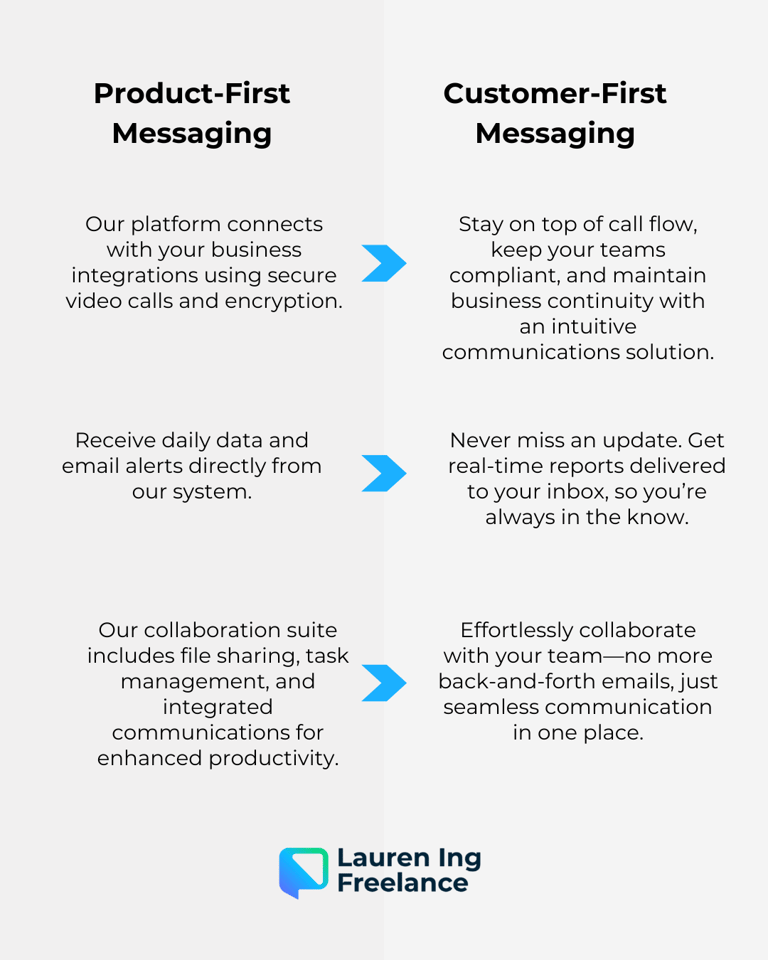
Customer-first messaging: The empathy approach
Product-first messaging: The feature-driven approach
It’s completely natural to want to show off an innovative solution. You’ve spent months to years building, refining, and testing it, and now that it’s in-market, you’re ready to showcase it to the world.
A product-first approach highlights the capabilities, specifications, and technical details, which is an effective strategy for market-disrupting solutions. And with a thoughtful approach to product-first messaging, you can minimize the risk of alienating customers who may not yet fully understand why those features matter to them.
This approach tells your audience: Our product is the best, and here’s why.
When your solution is groundbreaking, you spark curiosity, fuel conversations, and capture the attention of early adopters. This can accelerate sales among decision-ready buyers, sure. But additional context to connect product advantages to their specific needs is often required for those still familiarizing themselves with your brand.
Striking the right balance
Effective messaging aligns with your audience’s responsibilities, pain points, preferred channels, and buying journey. Leading with empathy, while connecting product capabilities to outcomes, helps brands create compelling narratives that guide prospects through the funnel.
Striking the right balance means knowing when to emphasize customer-first messaging to establish trust and when to highlight product-first messaging to showcase innovation. Knowing when and where to use each approach ensures your website speaks to the right audience at the right time, ultimately driving engagement and conversions.
Do you spot the difference? Customer-first messaging focuses on the user experience, while product-first messaging highlights technical capabilities.
Is your messaging connecting with your audience?
Your message is more than just words on a screen–it’s a direct reflection of your brand’s priorities and promise to your customers. Is your messaging providing an organic connection with your audience? Striking the right balance between customer-first and product-first ensures your messaging resonates with buyers at every stage, driving deeper engagement and conversions.
I’m Lauren, a B2B freelance content writer and strategist who helps brands bridge the gap between customer pain points and product capabilities. If your messaging isn’t moving your audience, let’s collaborate to create content that does. →
Your story, masterfully crafted.
Crafting content that drives business success forward.
Connect
lauren@laureningfreelance.com
+1 770-868-9627